
Blog
How a Modern Supply Chain Solution Actually Works
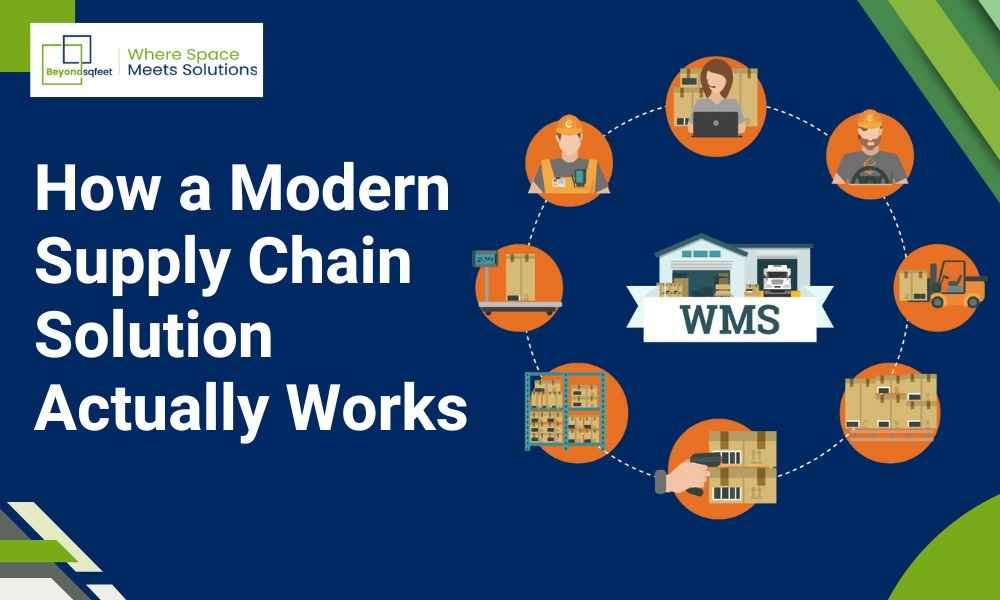
In this modern fast-moving market, customers expect speed, accuracy, and transparency. Today’s Businesses do not rely on conventional methods of storage and transport. What is a modern supply chain? It is a network of companies and technologies that use its collective potency to deliver a finished product.
The importance of supply chains
We have witnessed the complete transformation of business with the appropriate supply chain structure at Beyond Sq Feet. As the best logistics company, we focus on building solutions that are not just operational but strategic.
Let’s break down how a modern supply chain solution actually works.
1. Demand Planning Comes First
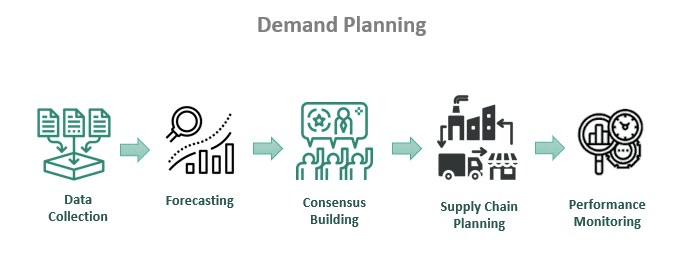
A good supply chain starts with a clear understanding of demand, and businesses will typically analyse past demand patterns and market behaviour to understand future needs.
Modern systems use data analytics tools to avoid two major problems:
- Overstocking (which increases storage costs)
- Stockouts (which lead to lost sales)
At Beyond Sq Feet, planning is data-driven. We help brands position inventory where it’s needed most, reducing delays and improving product availability.
2. Smart Procurement & Vendor Coordination
Once demand is forecasted, businesses coordinate with suppliers. Modern supply chains are not just about buying materials; they are about building strong vendor networks.
Digital procurement systems track:
- Supplier performance
- Lead times
- Cost fluctuations
This ensures smoother sourcing and fewer disruptions. Instead of reactive buying, companies operate proactively.
3. Warehousing Is Now a Technology Hub
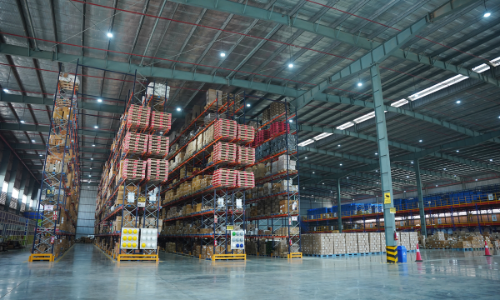
Warehouses today are not just storage spaces; they are operational control centres. A modern warehouse uses:
- Warehouse Management Systems (WMS)
- Barcode and RFID tracking
- Real-time inventory visibility
- Automated picking and packing processes
Warehousing at Beyond Sq Feet operates on the principles of speed and accuracy. Our warehouses are located in a position to reduce the time involved in transit and enhance the speed of distribution. The use of technology allows for the tracking of every product from the time of its arrival till the time of its dispatch.
This minimizes errors, ensures orders are accurate, and enables businesses to expand without chaos.
4. Inventory Management in Real Time
Modern supply chain solutions rely on real-time data. Businesses can see exactly:
- How much stock is available
- Where inventory is located
- Which products are moving fast or slow
This visibility helps brands make better decisions, like shifting stock between regions or running promotions to clear slow-moving items.
A connected inventory system prevents wastage and improves cash flow.
5. Transportation & Distribution Optimization
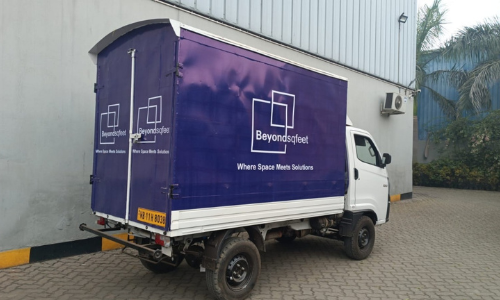
Transportation is one of the biggest cost factors in any supply chain. Today, route planning tools and tracking systems make delivery smarter.
Modern logistics systems use:
- Route optimization software
- Live GPS tracking
- Delivery performance analytics
At Beyond Sq Feet, we focus on reducing delivery time while controlling cost. Efficient routing ensures goods move quickly from warehouse to customer, whether it’s B2B distribution or last-mile delivery.
Customers now expect fast shipping, and smart logistics makes that possible.
6. Integration Through Technology
The real power of a modern supply chain lies in integration. All systems, procurement, warehousing, inventory, and transportation, are connected through digital platforms.
This creates:
- End-to-end visibility
- Fewer manual errors
- Faster decision-making
Cloud-based systems allow business owners to track operations from anywhere. If delays occur, action can be taken immediately instead of discovering issues later.
7. Data-Driven Decision Making
Supply chains today generate valuable data. Businesses use this data to:
- Improve delivery performance
- Reduce operational costs
- Plan warehouse expansion
- Identify demand trends
At Beyond Sq Feet, we believe logistics is no longer just the movement of goods; it’s the movement of information. Insights from operations help companies grow strategically.
8. Risk Management & Flexibility
Modern supply chains are built to handle disruptions such as:
- Supplier delays
- Transport issues
- Sudden demand spikes
Backup suppliers, multi-location warehousing, and diversified transport networks ensure continuity. Flexibility is what separates an average operation from a resilient one.
As the best logistics company, we design supply chains that can adapt, not just function.
9. Customer Experience at the Centre
Ultimately, the supply chain exists to serve the customer. Faster deliveries, accurate orders, and real-time tracking improve customer satisfaction.
A modern system ensures:
- Orders are processed quickly
- Deliveries are predictable
- Returns are handled smoothly
This builds trust and long-term brand loyalty.
Conclusion
A modern supply chain solution is not just about trucks and warehouses; it’s a synchronized ecosystem powered by technology, planning, and expertise. When every stage works together, businesses reduce costs, improve efficiency, and deliver better customer experiences.
At Beyond Sq Feet, we help brands build supply chains that are scalable, efficient, and future-ready. By combining smart warehousing, advanced technology, and strategic logistics planning, we deliver solutions that truly perform. That’s what makes us a trusted name and the best logistics company for businesses looking to grow without limits.
Related posts
Recent Posts
-
How a Modern Supply Chain Solution Actually Works
16 February 2026 -

-

-

Unlocking the True Potential of Free Trade Zones in India
19 August 2025 -