
Blog
How Hyperlocal Warehousing Can Improve Delivery Speed and Customer Experience
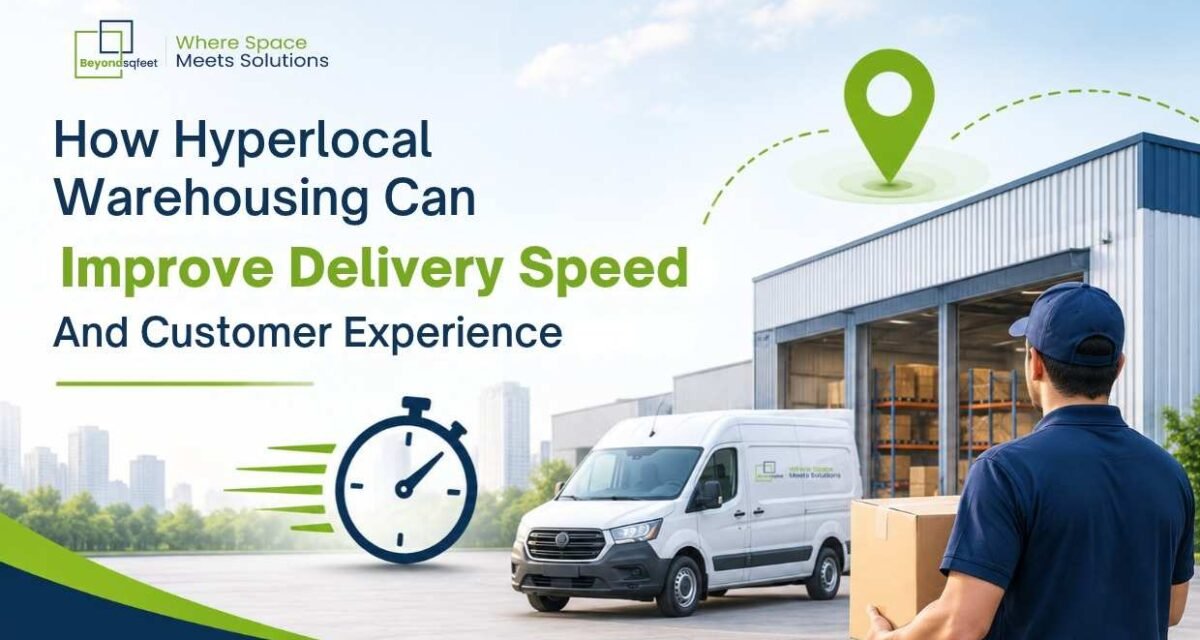
In this digital economy, customer expectations have shifted dramatically. Gone are the days when waiting five to seven business days for an online order was acceptable. Today, “fast shipping” means same-day or even instant delivery. To meet these soaring demands, supply chain leaders are constantly innovating, and a major game-changer has emerged: hyperlocal warehousing.
By decentralizing storage and moving inventory closer to urban consumers, businesses are redefining what is possible in logistics. But what exactly is hyperlocal warehousing, and how does it transform delivery speed and overall customer experience? Let’s dive in.
What is Hyperlocal Warehousing?
The conventional approach to warehousing involves using huge fulfilment centres situated on the peripheries of large urban centres. While the use of such large fulfilment centres is beneficial for mass storage, it poses many logistical challenges when distributing products to individual customers situated in large cities.
In contrast, hyperlocal warehousing involves using smaller but strategically located micro-fulfilment centres situated right within the localities or urban centres. Instead of delivering an order from a distant fulfilment centre, it can be delivered from a location that is just miles or blocks away from the customer.
The Direct Link Between Hyperlocal Warehousing and Delivery Speed
The most immediate benefit of a hyperlocal model is the drastic reduction in transit times. Here is how shrinking the distance between inventory and buyer accelerates the entire delivery lifecycle:
1. Eliminating Long-Haul Transit Delays
Traditional supply chains involve multiple touchpoints: factory to regional warehouse, regional warehouse to local sorting facility, and finally to the customer’s doorstep. Hyperlocal warehousing cuts out several of these intermediate steps. With stock already positioned locally, the fulfilment process shifts almost instantly from pick-and-pack to last-mile delivery.
2. Streamlining Last-Mile Logistics
The last mile is notoriously the most expensive and time-consuming part of the supply chain. By utilizing micro-hubs, delivery fleets ranging from electric vans to motorbikes to travel shorter distances. This minimizes exposure to traffic congestion, highway delays, and scheduling mishaps, ensuring attempts are made to deliver and packages arrive on time.
3. Enabling Same-Day and Instant Delivery
When inventory are positioned minutes away from the target demographic, offering same-day or even 2-hour delivery becomes operationally feasible. This capability is no longer just a luxury reserved for industry giants; it is becoming an accessible standard for growing brands.
Elevating the Customer Experience (CX)
Delivery speed is vital, but customer experience encompasses much more than a fast drop-off. Hyperlocal warehousing enhances the buyer’s journey across several dimensions:
Predictable and Accurate ETAs
Shorter transit routes mean fewer variables can disrupt the delivery schedule. Customers receive tighter, more reliable delivery windows.
Seamless Returns Management
Returns are a major pain point in e-commerce. Local micro-hubs can double as convenient drop-off points or quick staging areas for reverse logistics, making the return process painless for the consumer.
Higher Product Availability
Because hyperlocal networks leverage smart inventory forecasting tailored to specific neighbourhoods, popular items are less likely to go out of stock locally.
Finding the Right Partner: Looking Beyond Square Feet
Implementing a hyperlocal strategy requires a sophisticated approach to real estate and inventory management. Success isn’t just about renting space; it is about finding the best warehousing solution that integrates seamlessly with your existing tech stack and scales with your business growth.
When evaluating partners, brands must look Beyond Sqfeet of storage space and focus on agility, location intelligence, and technological integration. The ideal partner offers flexible micro-spaces equipped with real-time inventory visibility, automated order routing, and a robust network of local couriers. This ensures that your transition to hyperlocal fulfilment is smooth, cost-effective, and future-proof.
Conclusion
The e-commerce landscape shows no signs of slowing down, and customer demands for speed and reliability will only intensify. Hyperlocal warehousing bridges the gap between consumer expectations and logistical reality. By bringing products closer to the people who buy them, businesses can slash delivery times, elevate customer satisfaction, and build lasting brand loyalty.
Embracing this localized shift with the right infrastructure is no longer just an alternative strategy it is the future of modern commerce.
Related posts
Recent Posts
-

-

How a Modern Supply Chain Solution Actually Works
16 February 2026 -

-

-

Unlocking the True Potential of Free Trade Zones in India
19 August 2025